INTRODUCTION
Bridging Continents focuses on agriculture, commercial property and project investments, providing expert guidance. We leverage local expertise and a strong partner network to help businesses make informed decisions. Our aim is to drive sustainable growth and successful investments in Thailand.
AGRICULTURAL INVESTMENT
Thailand, often referred to as “the kitchen of the world,” offers a unique combination of abundant natural resources, a year-round growing season, and a cost-effective yet highly skilled labor force. These factors make it an ideal destination for agricultural investments.
The country boasts a diverse agricultural landscape, producing everything from tropical fruits and vegetables to rice, rubber and spices. Thailand’s agricultural sector is supported by robust government policies and incentives, which help attract both domestic and foreign investment. Additionally, the Thai government has made significant strides in sustainability and innovation, promoting eco-friendly farming practices and ensuring high product quality standards.
With its competitive labor costs, strategic location within Southeast Asia, and established trade relationships, Thailand presents a wealth of opportunities for investors looking to tap into the thriving global food and agriculture markets. Investors can benefit from the growing demand for quality agricultural products, driven by both domestic consumption and exports to key international markets.
AGRICULTURAL INVESTMENT
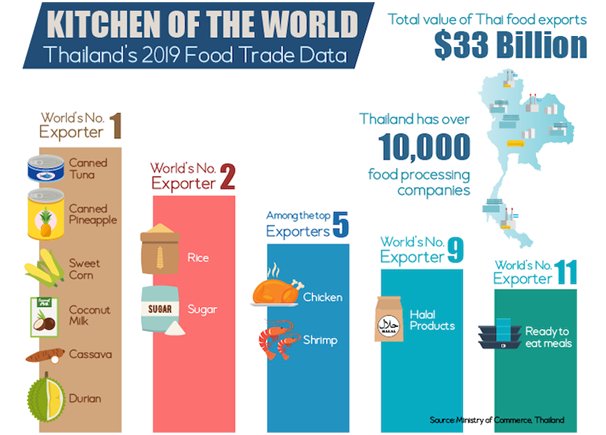
International consumers are, of course, no strangers to Thai food. Aromatic Thai curries, stir-fries and fiery tom yam soups are devoured hungrily in tens of thousands of restaurants around the globe. However, the kingdom’s critical role as a “kitchen of the world” is perhaps not so widely understood.Lush and fertile with a population of almost 70 million, Thailand is one of the fortunate few countries that can produce far more food than it consumes – including the world’s most sought-after staple, rice.
In a world that since the COVID-19 crisis has increasingly been concerned about food security, Thailand’s 10,000 food processing companies stand out as reliable suppliers of safe and plentiful food. Thailand is the world’s number 1 exporter of canned tuna, canned pineapple, sweet corn, coconut milk, cassava, and durian. It ranks 2nd in the world in rice and sugar and among the top 5 in chicken and shrimp. Although not a predominantly Muslim nation, it is the 9th largest exporter of halal products. It is also the 11th biggest global supplier of ready-to-eat meals.
As with all the activities of Bridging Continents it is focussed on helping Thai small and medium-sized entrepreneurs and does this in the agricultural space as well. There are many Thai farmers and small farmer associations who wish a stable income and make a joint venture or work directly with a foreign entity to produce certain crops together long-term. There are also small and medium sized food processing companies who wish to grow their systems and business with domestic and foreign investment.
COMMERCIAL PROPERTIES
Bridging Continents is active in the commercial property sector, offering opportunities in qualified commercial properties such as hotels and resorts, industrial properties including factories, warehouses, and land, as well as other investment properties like golf courses.
Commercial property investors can share their specific requirements with Bridging Continents, who will work to identify suitable properties and facilitate the purchase process. With the right guidance and a unique network, there are ample opportunities for those looking to invest in Thailand’s commercial real estate market. This activity is managed by Bridging Continents’ CEO, who has successfully completed both Thai and American realtor courses, bringing valuable expertise and a unique network to the table.
PROJECT INVESTMENTS
As outlined below, Thailand is an attractive country for investment. However, as with any investment, proper back-office work and a clear investment strategy are essential. With the support of our experienced legal team and strong connections within the government, Bridging Continents can successfully initiate projects or expedite those that are facing delays. We embrace challenges and provide clear, honest feedback to investors regarding what can and cannot be done. Our approach typically follows a “no cure, no pay” system, ensuring results-driven service.
ADVANTAGES THAILAND
Thailand, with a population of 69 million, is strategically located at the heart of the ASEAN Economic Community, a unified market of 660 million consumers. As the second-largest economy in Southeast Asia, Thailand boasts a robust consumer base with a total buying power exceeding US$246.11 billion. Its strategic location offers excellent access to the fast-growing CLMV countries (Cambodia, Laos, Myanmar, and Vietnam), as well as the powerhouse economies of China and India, all supported by world-class infrastructure for air, land, sea, and rail transportation. Thailand also excels in digital connectivity, a highly skilled labor force, and a high standard of living, making it a cost-effective investment destination. With strong government policies and attractive investment incentives, Thailand is a preferred choice for investors in the region. As of early 2025, Thailand’s top trading partners were China, the United States, Japan, Malaysia, Vietnam, Australia, Indonesia, Singapore, South Korea, and India.
LOCATION & MARKET ACCESS
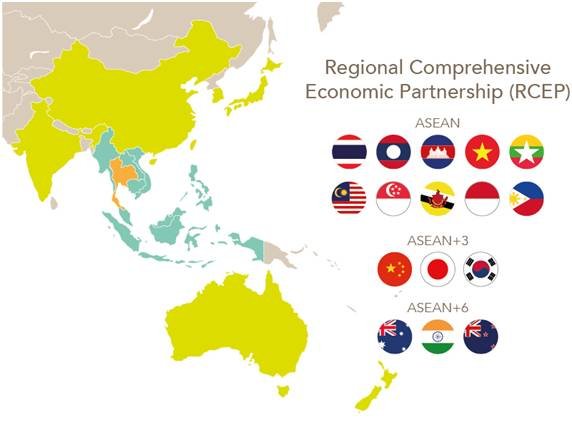
Thailand is strategically connected to the fast-growing CLMV sub-region (Cambodia, Laos, Myanmar, and Vietnam) through its excellent transportation infrastructure, which includes rail, road, water, and airways. Businesses based in Thailand have access to a domestic market of 69 million people, with 52 million middle-class consumers. The CLMV region alone includes 242 million consumers within 1,000 kilometers. ASEAN provides access to 660 million consumers within 3,000 kilometers, while all of Asia, within 5,000 kilometers, offers a market of 4.6 billion consumers. Ongoing national investment in logistics and rapid development of Thailand’s transportation systems are helping to integrate the country’s infrastructure with those of other emerging economies, creating vast opportunities for cross-border trade and investment. Thailand enjoys the benefits of almost tariff-free trade with 18 nations, including major global economies such as Australia, China, New Zealand, and South Korea, as well as the ASEAN community. The country has signed 13 Free Trade Agreements (FTAs), in addition to the Regional Comprehensive Economic Partnership (RCEP), which is expected to be ratified soon and will cover about one-third of global GDP.